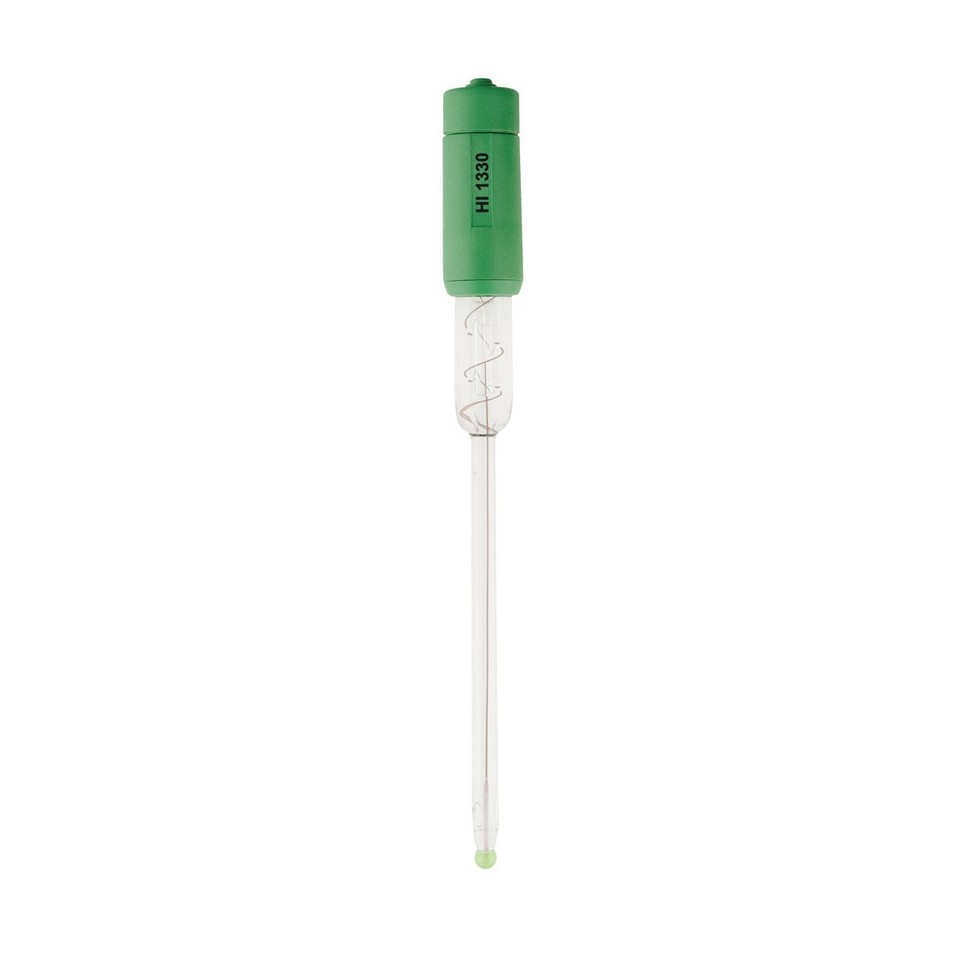
Combination electrode HANNA HI 1330B (glass)
Combination electrode HANNA HI 1330B (glass). Refillable pH electrode with glass body, one salt bridge and BNC connector. The electrode is equipped with a ceramic diaphragm and a small spherical pH-sensitive membrane made of glass for low temperatures. The electrode design is ideal for measuring pH in test tubes, flasks and other small laboratory glassware. Low temperature glass Measuring pH at very high temperatures damages the sensitive glass membrane and shortens its life. A general purpose glass pH electrode has a resistance of 100 MΩ at 25 °C, while a LT glass has a resistance of approximately 50 MΩ at 25 °C. As the temperature of the glass in the sample decreases, the resistance of LT glass will approach that of general purpose glass. If general purpose glass was used, the resistance would decrease more slowly than optimal, resulting in lower impedance values and subsequently affecting measurements. The HI 1330B electrode is suitable for measuring samples in the range from -5 to 70 °C. Spherical membrane The spherical membrane is used for general purposes. Other membrane shapes include penetrating conical and flat for surface measurement. Glass body The glass body is ideal for laboratory use. Glass is resistant to various aggressive environments and is easy to clean. The glass housing also facilitates rapid heat transfer to the internal reference electrode. The voltage generated by the reference electrode depends on temperature. The faster the electrode reaches equilibrium, the more stable the potential of the reference electrode. Single ceramic diaphragm The outer diaphragm of the electrode, also known as the salt bridge, is an integral part of the electrical circuit. For a stable signal, the movement of ions must occur through a salt bridge. On the outside, the reference electrode has a single ceramic diaphragm. Ceramics is a porous material that easily fuses with a glass body and has a similar expansion coefficient. The permeability of a single ceramic diaphragm is 15-20 µl/hour. Other types of salt bridges made from other materials allow higher permeability values to be achieved. Fillable electrode HI 1330B – refillable electrode. For pH electrode with one salt bridge, HI 7071 3.5M KCl + AgCl solution is used for filling. When using a refillable electrode, the refill cap must be opened prior to calibration and measurement. Opening the cap creates pressure in the reference electrode, which allows increased electrolyte flow through the diaphragm. The higher the flow level, the faster and more stable the measurement results will be. BNC connector. The HI 1330B uses a BNC connection. This is a universal connection that allows the electrode to be used on any pH meter with the same type of connection. Other types of connections are DIN, threaded, T-shaped and 3.5 mm. These types of connections are typically specific to a specific type of device and are not interchangeable. Manba: https://www.nv-lab.ru/catalog_info.php?ID=5914
- Parameter: Value
- Diameter, mm: Ø5
- pH range: 0 to 12
- Diaphragm / flow rate: ceramic, single / 15-20 µl/h
- Case length / Total length, mm: 80 / 175.5
- Cable: coaxial; 1m (3.3’)
- Maximum pressure, bar: 0.1
- Case material: glass
- Application: test tubes, ampoules
- Connector: BNC
- Recommended temperature range, °C: -5 to +70 (23 to 158 °F)
- Matching contact: no
- Temperature sensor: no
- Amplifier: no
- Membrane shape: spherical (Ø5 mm)
- Digital: no
- Reference electrode: single, Ag/AgCl
- Electrolyte: 3.5M KCl + AgCl